East Coast FM vet spot: urban foxes and a listener with a stray Muscovy duck. Listen here:

On East Coast FM this week, a listener called in with an unusual problem: a Muscovy duck had crash-landed onto their conservatory. After dealing with this tricky situation, we moved on to discuss the issue of urban foxes. Click on the play button below to listen.

Posted in animal welfare, audio, bird, east coast, wildlife | Leave a comment

East Coast FM vet spot: cats behaving badly – feline stress and social life

On East Coast FM this week, a reader texted in with a query about a cat that had started piddling in the house. This is a common problem, often linked to social stress. To hear more, click on the play button below:

Posted in audio, behaviour, cat, east coast | Leave a comment

Ireland AM Vet Spot: why sighthounds – from greyhounds to whippets – make such good pets – watch the video here

On Ireland AM this week, we met up with a bunch of enthusiasts for “sight hounds”  -  greyhounds, whippets, Salukis, Wolfhounds, Lurchers and others.

To watch the video, click here.

To visit the Sighthound Strolls website, click here.

Posted in campaign, dog, TV3 | Leave a comment

Daily Telegraph “Pet Subjects: a carrot-loving cat, sausage-loving dog, itchy hamster, barking dog and Bob the street cat

To read this week’s Pet Subjects column in the Daily Telegraph, click here.

Ben (pictured above) is 13 years old and has been in the care of Cats Protection for four months since his owner sadly passed away. He is a large, gentle cat who loves affection and cuddles and purrs happily when his tummy is brushed. He also likes to have his face stroked. Ben is in need of a retirement home and would be best suited to an adult-only household but is used to living with a dog and other cats. Ben is neutered, microchipped and vaccinated and is on medication for rhinitis. If you live in the Gosport area and would like to offer Ben a home please call Cats Protection’s Gosport Town Branch on 02392 582 601.

Posted in behaviour, cat, dog, hamster, Telegraph column | Leave a comment

Video of Ireland AM vet on TV3: all about cat fights and bites

This week, I discussed the common issue of cats fighting on Ireland AM. You can watch the video by clicking here. I brought a cat called Benny along with me – I treated him last week for a bite on his tail, which is pictured above. At the time, it was very painful and infected: as you’ll see in the video clip, he’s back to normal now.

Cats are territorial creatures, often using physical fights to resolve disputes. Cat bites can  seem like insignificant injuries at first. The teeth are very sharp, and they make tiny puncture wounds, a few millimetres in diameter. However, the mouth of a cat contains thousands of disease-causing bacteria, and these are carried into the wound by the teeth. Within a few hours, the bacteria multiply rapidly, and the bite wound often becomes swollen, red and painful. Bites can happen anywhere on the body – the rear end (like the tail, in Benny’s case) is common in cats that are running away from aggressors, and the front end – head, forelegs – is common in cats that are either aggressors themselves or cats that are standing up to aggressors. A cat bite is the most common cause of lameness in cats
and whenever a vet sees a lame cat, we’ll always feel carefully up and down the affected leg, looking for swellings, scabs or other signs of cat bites.
Treatment is nearly always simple wound hygiene, antibiotics and pain relief. Most cases do really well with treatment.
There is another possible danger: cats pass on a dangerous virus to each other via bites – Feline Immunodeficiency Virus – the equivalent of HIV in humans. It’s no risk at all to humans, but it can cause CatAIDS. For this reason, owners should do their best to prevent their cats from being bitten by other cats.
Male hormones are the cause of most fighting behaviour in the cat world. If a male cat is castrated, the incidence of fight wounds reduces by over eighty per cent. Neutered cats are much less likely to get involved in fights, but they still respond if they are challenged by aggressive interlopers like visiting tom cats.
Situations like this can be difficult to resolve. If a cat has repeated fight injuries, owners should first of all try to contact the owner of any other cats that they have seen causing a problem, suggesting that they are neutered. They may need to consider using a cat trap to catch marauding feral cats, and then organise for them to be neutered. If that was done, there would definitely be fewer cat fights in the area.

Tips

  • Cat bites are the most common cause of lameness in cats
  • Cats can be bitten anywhere by other cats
  • Antibiotics and pain relief are usually needed

Preventing cat bites

  • Male cats are more likely to fight
  • Neutering reduces fighting behaviour by 80%
  • Aggressive feral male cats should be trapped and neutered

Risks of cat bites

  • Wounds and abscesses
  • Feline Immunodeficiency Virus (FIV)
Posted in behaviour, cat, TV3, video | Leave a comment

Pet Subjects from Daily Telegraph vet: tortoise behaviour, parrot needing a pedicure, a dog in mourning & does a cat really need dental work carried out?

To read the latest Pet Subjects column online, click here.

This week’s rescue pet, pictured above, is Bill the Guinea Pig.

At Bath Cats and Dogs Home, there are many wonderful pets in small guises looking for homes, including rabbits, guinea pigs, ferrets, gerbils, degus, hooded rats and even chickens, as well as the hundreds of cats and dogs, all seeking their forever homes.

Friendly guinea pig, Bill, is very cute and lovable. Although shy initially, he quickly gains confidence and is happy to be picked up and cuddled. He enjoys plenty of fresh hay, guinea pig food mix, fresh water and a selection of vegetables – carrots and greens are his favourites. Wood chews also keep him busy and his teeth well filed.

Easy to handle, easier to pick up and hold with small hands than rabbits and less likely to wriggle around and be dropped, guinea pigs are good-natured and perfect for very small children (under close adult supervision, of course)

If you would like more information about Bill or any other small animals, cats of dogs at Bath Cats and Dogs Home, please contact: 01225 787321, visit www.bcdh.org.uk or call the fundraising team on: 01225 787334

Posted in behaviour, cat, dog, guinea pig, Telegraph column | Leave a comment

Ireland AM vet Q & A: from fleas to diabetes to snorting noises. Watch the video here.

The following texts were sent in to TV3 from Ireland AM viewers. To find out my answers, watch the video by clicking here.


  1. Our new pup is scratching and we are worried that he may have brought fleas into my home which could affect my other dog. I applied a spot on two days ago so cannot do this again for two weeks. What can I do?
  2. My 10 month old Westie is very good with kids but aggressive when meeting other dogs. Would castration help?
  3. My westie has just been diagnosed with diabetes any tips for her health care
  4. My dog has recently developed a loud snorting noise. It has not affected his appetite or overall well being as far as I can see. What could this be and should I be concerned. Regards Dave Foran from Tallaght.
  5. I have a Long Haired Jack Russel Terrior called Max. He’s really clever and is able to get the post, my slippers, open the patio door and jump through hoola hoops. :D but he’s sometimes a bit strange about his food.. He won’t really eat in the morning and generally waits until we’re home from work and school. He also eats very slowly and would take his food over to the grass and eat it there and go back to the bowl to take another bit over and so on. He also doesn’t like eating when there’s no one beside him. And just as you were saying about the barking, he barks all day. We live in an estate and it’s been disturbing my neighbours for years but there’s no stopping him. From Aine in Meath.
  6. I had 2 dogs from the same litter one had to be put down and the other now seems depressed and has started to bark a lot how can I help
  7. My Labrador dog is extremely flatulent at nite and in the morning, and not necessarily after eating. she doesn’t suffer from diarrhoea or vomiting and she is in great shape. she eats a diet of mainly dog nuts, milk, water, cheese, meat scraps and good brand dog food cans. obviously its natural to pass some gas daily but is there anything that can be added or removed from the diet to reduce the amount she releases. from AnneMarie in county limerick
  8. I was just wondering is it normal for our dog to sometimes eat his own poo?
Posted in animal welfare, behaviour, cat, dog, TV3 QA, video | Leave a comment

East Coast FM vet spot: what to do if your neighbour’s dog is barking too much

Following on from the TV discussion earlier this week about what to do if your own dog is barking too much, East Coast FM’s Declan Meehan asked me what to do if your neighbour’s dog is the one causing a problem. Listen by clicking on the play button below.

Posted in audio, behaviour, dog, east coast | Leave a comment

Video of TV3 vet spot on Ireland AM – pet questions and answers in the studio

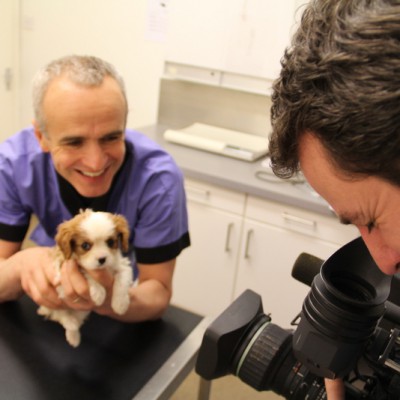
This week, I answered viewers’ pet questions live in the studio. Watch the video here.

Questions asked included:

1) My mother’s small dog is dragging its bottom along the ground. Could it be worms?

2) My neighbour’s cats keep coming into my garden, defaecating. How can I stop them?

3) I have an 8 week old Scottish Terrier who keeps biting everything. How can I train her not to. Also, should I use a harness or a collar? Also, when is a good time to train her on a leash?

4) My daughter is looking for a puppy. Which is best: a Maltese or a Yorkie?

5) I’m expecting a baby in July and I have four dogs. How can I get them ready for the new arrival?

Posted in behaviour, cat, dog, TV3 QA, video | Leave a comment

Pete the Vet on TV3′s Ireland AM: how to stop dogs from barking too much

On Ireland AM today, we discussed the common problem of dogs barking when owners don’t want them to do it. To watch the video, click here.
For a detailed discussion of barking in dogs, read my blog post from earlier today.

Posted in animal welfare, behaviour, dog, TV3, video | Leave a comment